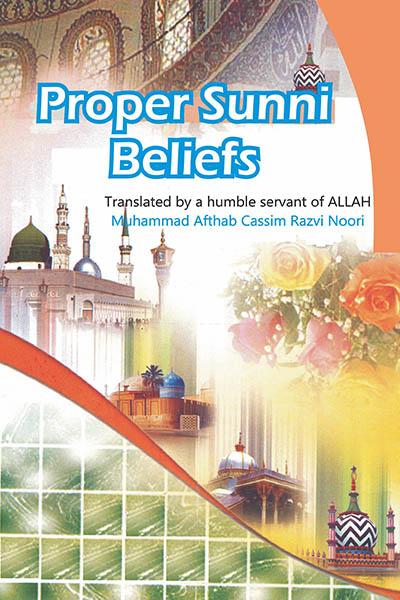
This work outlines the core tenets of the Ahl al-Sunnah wa al-Jama’at, focusing on the nature of Almighty Allah and the exalted status of the Prophet Muhammad, ﷺ. It defines the Prophet, ﷺ, as the most unique human being, created from the Light (Noor) of Allah, and affirms his ongoing life, his capacity to hear from great distances, and his role as the intercessor for his Ummah. The text provides scriptural and traditional evidence to support practices such as seeking mediation (Wasila) through the Prophet, ﷺ, and the awliya, as well as the permissibility of celebrating Meelad-un-Nabi, ﷺ, and reciting Durood aloud.
The volume emphasizes that the Prophet, ﷺ, is the teacher of the entire creation, possessing knowledge of the past and future bestowed upon him by Allah. It defends traditional Sunni practices against opposing ideologies, citing the consensus of scholars and the actions of the Companions, رَضِيَ اللهُ عَنْهُمْ, to validate customs such as kissing the hands of the pious, reciting Zikr aloud after Salaah, and making Dua after Janaazah.
Key topics & takeaways
Belief in Allah
- Allah is free from defects — the work holds that Allah does not lie and does not possess the power to lie, as lying is a defect and therefore impossible (muhaal) for Him ▸page 9.
- Allah’s knowledge — Allah’s knowledge is Ilm-e-Zaati (Self-Knowledge), which He does not attain from anyone else ▸page 13.
The Prophet Muhammad, ﷺ
- The Prophet is Noor — the work affirms that the Prophet, ﷺ, is Light, created from the Light of Allah before all other things ▸page 17.
- Unique status — the Prophet, ﷺ, is not an ordinary human; he is the most superior of all creation ▸page 27.
- Hearing and presence — the Prophet, ﷺ, hears the Durood and Salaam of his Ummah from any distance and is Haazir and Naazir (present and witnessing) (▸page 53, ▸page 155).
- Knowledge of the Unseen — the Prophet, ﷺ, possesses knowledge of the past and future, granted to him by Allah ▸page 163.
- Life in the grave — the Prophet, ﷺ, is alive in his grave, and the earth is forbidden from consuming the bodies of the prophets ▸page 147.
- Intercession — the Prophet, ﷺ, is the master of intercession (Shafa'at) and will intercede for his Ummah on the Day of Judgment ▸page 41.
Practices and Rulings
- Wasila (Mediation) — seeking mediation through the Prophet, ﷺ, and the awliya is permissible and supported by the Qur'an and Sunnah ▸page 71.
- Seeking assistance — it is permissible to seek help from the awliya as they are the beloved servants of Allah appointed to assist the people ▸page 59.
- Naming conventions — keeping names such as Ghulam Mustafa or Abdun Nabi is permissible and a means of attaining blessings ▸page 49.
- Zikr after Salaah — reciting Zikr aloud after Salaah is a Sunnah practice and is considered Mustahab ▸page 95.
- Dua after Janaazah — making Dua after Janaazah Salaah is permissible, and there is no restriction against making multiple Duas ▸page 101.
- Kissing hands and feet — it is permissible and desirable to kiss the hands and feet of the pious out of respect ▸page 109.
- Meelad-un-Nabi — celebrating the birth of the Prophet, ﷺ, is a blessed and permissible act ▸page 117.
- Durood before/after Azaan — reciting Durood before and after the Azaan is desirable and lawful ▸page 137.
- Kissing thumbs — kissing the thumbs upon hearing the Prophet's, ﷺ, name in the Azaan is a practice that brings spiritual benefit ▸page 141.
- Khatam Shareef — performing Khatam Shareef and sending the reward to the deceased is a blessed act ▸page 129.