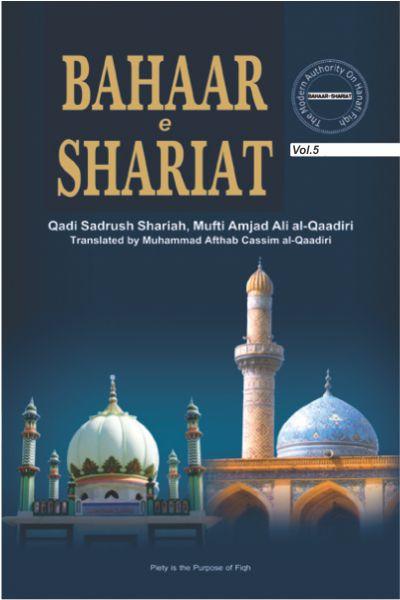
This volume details the jurisprudence of Zakaat, Sadaqa e Fitr, optional charity, fasting, and I’tekaaf according to the Hanafi school. It establishes the obligation of Zakaat as a fundamental pillar of Islam, categorizing it as a mandatory duty whose rejection constitutes kufr and whose neglect invites severe spiritual and worldly consequences. The work defines the conditions for Zakaat to become waajib, including the requirement of being a Muslim, sane, an adult, and the possessor of nisab (the minimum threshold of wealth) for one full lunar year. It provides specific thresholds for gold, silver, and merchandise, while detailing the exemptions for haajat-e-asliyah (basic necessities) such as housing, clothing, and tools.
The text further outlines the specific rules for sa’imah (grazing livestock), fixing the counts for camels, cattle, and goats that trigger the obligation of Zakaat. It details the duties of the aashir (customs officer) and the distribution of ushr (tithe) on agricultural produce, distinguishing between land irrigated by natural sources and that requiring manual labor. The work identifies the eight categories of recipients eligible to receive Zakaat and explicitly prohibits its use for the construction of mosques or the burial expenses of the deceased, as these do not fulfill the requirement of transferring ownership to a needy individual. Finally, the volume covers the laws of fasting, including the necessity of niyyat (intention), the sighting of the moon, acts that invalidate the fast, and the conditions requiring kaffarah (expiation) or qaza (makeup).
Key topics & takeaways
Zakaat
- Definition of Zakaat — it is the act of making a faqeer (needy person) the owner of a portion of one's wealth for the sake of Allah ▸page 29.
- Nisab of gold and silver — the threshold is fixed at 7.5 tola of gold or 52.5 tola of silver, or the equivalent value in trade goods ▸page 90.
- Exemptions from Zakaat — basic necessities such as housing, clothing, household items, and tools of trade are exempt from the calculation.
- Zakaat on grazing livestock — it is due on camels, cattle, and goats that graze freely for the majority of the year ▸page 63.
- Zakaat on camels — the obligation begins at 5 camels, which requires the payment of one goat ▸page 65.
- Zakaat on cattle — the obligation begins at 30 cows, requiring one tabee (a one-year-old calf) ▸page 68.
- Zakaat on goats — the obligation begins at 40 goats, requiring one goat ▸page 70.
- Zakaat on merchandise — the rate is 2.5% (one-fortieth) of the total market value ▸page 78.
- Mines and treasure — one-fifth (khums) is due on minerals extracted from unowned land ▸page 100.
- Ushr on crops — one-tenth (ushr) is due on land irrigated by rain or streams, while one-twentieth is due on land irrigated by manual labor ▸page 104.
- Prohibited recipients — Zakaat cannot be given to parents, grandparents, children, grandchildren, spouses, or members of the Bani Hashim ▸page 133.
Sadaqa e Fitr and Charity
- Sadaqa e Fitr obligation — it is waajib upon every free Muslim who possesses nisab and must be paid before the Eid prayer ▸page 139.
- Sadaqa e Fitr amount — the requirement is one sa' of dates or barley, or half a sa' of wheat, or the equivalent value ▸page 146.
- Prohibition of begging — it is haraam for those who are physically fit and healthy to seek financial aid from others ▸page 149.
- Nafil charity — optional charity is highly encouraged, with special rewards for giving to relatives and maintaining secrecy ▸page 159.
Fasting and I’tekaaf
- Intention for fasting — a valid niyyat is required for every day of Ramadan, and it may be made up until zahwa e kubra (mid-morning) for fard or nafil fasts ▸page 201.
- Moon sighting — the commencement of Ramadan and the day of Eid are determined by the sighting of the crescent moon; astronomical calculations are not accepted as a substitute for visual testimony.
- Invalidators of the fast — intentional eating, drinking, smoking, or sexual intimacy during the day breaks the fast and requires both qaza and kaffarah ▸page 176.
- Acts that do not break the fast — forgetfulness, vomiting, using surmah (kohl), or swallowing one's own saliva do not invalidate the fast ▸page 217.
- Exemptions from fasting — illness, travel, pregnancy, and breastfeeding are valid reasons for delaying the fast, though qaza must be performed later ▸page 253.
- Fidya for fasting — those permanently unable to fast due to old age or chronic illness must pay fidya equivalent to Sadaqa e Fitr for each missed day ▸page 259.
- I’tekaaf — this involves remaining in the mosque with the intention of worship; it is categorized into waajib, sunnat-e-mu’akkadah, and mustahab types ▸page 284.